Transforming Waste Management in Uttarakhand: The Char Dham Success Story
Transforming Waste Management in Uttarakhand: The Char Dham Success Story
Sep 30, 2024
Learn how the Deposit Refund System transformed Char Dham's waste management, promoting clean, sustainable, and eco-friendly pilgrimages.
Learn how the Deposit Refund System transformed Char Dham's waste management, promoting clean, sustainable, and eco-friendly pilgrimages.
Uttarakhand’s Char Dham Yatra is the most renowned and one of the most visited pilgrimage sites in India, attracting millions of pilgrims every year to – Kedarnath, Badrinath, Gangotri, and Yamunotri. In 2023 alone, the pilgrimage population welcomed more than 56 lakh devotees in Char Dham. With such a massive influx of visitors, however, came a tremendous surge in waste, creating significant environmental challenges for the region.
The pristine landscapes of the Char Dham were being littered with plastic bottles, snack wrappers, and other forms of waste. On busy days, up to 30,000 visitors trekked the sacred routes, leading to over 20,000 pieces of plastic being discarded daily. Using traditional waste management methods proved insufficient due to the region's unique terrain, high altitudes, and limited accessibility. The situation called for an innovative, scalable solution that would manage waste as well as create a sustainable impact on the local environment and community.
The Challenges of Waste Management in Char Dham
The geography and weather conditions of Uttarakhand are unique and present several challenges to effective waste management. The Char Dham region is known for its steep, rocky landscapes, which make the collection and any transportation of waste extremely difficult and costly. High altitudes exceeding 3,200 meters above sea level add further complexity, as thin air and rugged terrain hinder the efforts of workers and machinery. In many cases, the pilgrimage sites are only accessible on foot or by mule, slowing down waste removal processes.
Additionally, extreme weather conditions, including snowstorms, heavy rains, and landslides, frequently disrupt waste management operations. In some cases, waste would accumulate over time, making the already challenging task of managing the environment even harder.
Faced with these obstacles, it became clear that the Char Dham pilgrimage needed a transformative waste management system that could handle the volume of waste effectively and sustainably without relying on conventional methods.
The Recykal Circularity Platform: A Revolutionary Solution
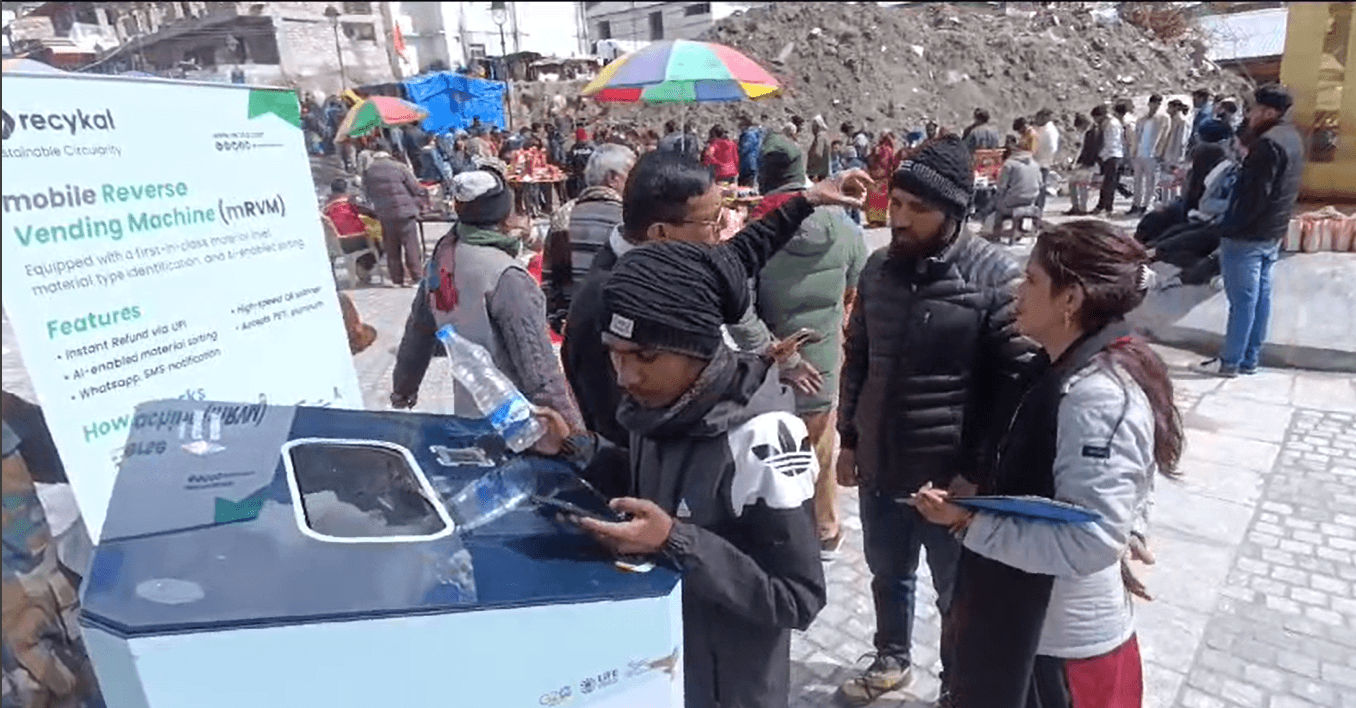
To address the escalating waste problem, Recykal introduced its digital Deposit Refund System (dDRS), an innovative system designed to incentivise proper waste disposal and recycling. The idea was simple but powerful: attaching a small deposit amount to packaging like plastic bottles and snack wrappers. Pilgrims would pay this deposit at the time of purchase and could reclaim it by returning the waste to designated collection points. This system created an economic incentive for individuals to participate in waste management actively, driving a shift in behaviour among both tourists and locals.
The digital DRS was implemented in two phases. The first phase, which took place between May and July 2022, saw the system being introduced in Kedarnath. During this phase, Recykal partnered with local hotels, shops, and temples to distribute QR codes that could be attached to packaging for tracking purposes. This phase laid the foundation for a more efficient and transparent waste management process. The second phase, between September and November 2022, expanded the system to the other pilgrimage sites of Gangotri, Yamunotri, and Badrinath. In this phase, the district administration mandated that all retailers adopt the QR code system, further streamlining the waste collection and deposit refund process.
The Economic, Environmental, and Social Impact of DRS
The implementation of the Digital DRS in Char Dham has had a far-reaching impact on the region, influencing not only the environment but also the local economy and society at large.
From an economic perspective, the initiative created over 110 new jobs, supporting local waste collectors and administrators. The informal waste management sector saw a 37.5% increase in revenue, while retailers benefited from the system by collecting handling fees. This led to a total revenue increase of ~3.14 lakh for the retailers involved. Moreover, the system significantly reduced the government's waste management burden, saving ~3.73 crore in public expenditure.
Environmentally, the impact has been equally impressive. Since the launch of the Digital DRS, over 20 lakh plastic bottles have been collected and recycled, drastically reducing the amount of litter in the region. By diverting plastic waste from the environment and channelling it into recycling, the initiative has saved approximately 66 metric tons of CO2 emissions. The recycling rates improved dramatically, with Kedarnath reporting a 300% increase in plastic bottle collections.
On the social front, the DRS initiative has led to a significant behavioural shift among both pilgrims and the local community. There has been a 21% increase in proper waste disposal practices as individuals became more aware of the environmental impact of their actions. The system has also helped foster a culture of sustainability and environmental consciousness in the region, ensuring that the pilgrimage sites remain clean and preserved for future generations.
Recognition for Transformative Impact
The transformative impact of the Digital DRS in Char Dham did not go unnoticed. In 2022, the district administration of Rudraprayag received the Digital India Award from the Ministry of Electronics and Information Technology. This prestigious award, presented by President Droupadi Murmu, recognised the district's innovative use of digital technology to solve a critical environmental issue. The success of the DRS system in Char Dham is now being looked at as a model for waste management solutions across other regions in India.
The Path to a Sustainable Future
The Char Dham success story stands as a testament to the potential of digital solutions to tackle even the most daunting waste management challenges. By linking ecology with economy, the Recykal Circularity Platform has not only cleaned up the sacred pilgrimage sites but also created new economic opportunities for the local community.
As Recykal continues to refine and expand its Digital DRS, the platform offers a replicable model for other regions grappling with waste management issues. Uttarakhand's journey demonstrates how combining technological innovation with community engagement can create lasting, sustainable change.
Be Part of the Change
The Char Dham success story is just the beginning. To learn more about how Recykal's tech and innovation are transforming waste management and contributing to a more sustainable future, click here to read our full success story.
Uttarakhand’s Char Dham Yatra is the most renowned and one of the most visited pilgrimage sites in India, attracting millions of pilgrims every year to – Kedarnath, Badrinath, Gangotri, and Yamunotri. In 2023 alone, the pilgrimage population welcomed more than 56 lakh devotees in Char Dham. With such a massive influx of visitors, however, came a tremendous surge in waste, creating significant environmental challenges for the region.
The pristine landscapes of the Char Dham were being littered with plastic bottles, snack wrappers, and other forms of waste. On busy days, up to 30,000 visitors trekked the sacred routes, leading to over 20,000 pieces of plastic being discarded daily. Using traditional waste management methods proved insufficient due to the region's unique terrain, high altitudes, and limited accessibility. The situation called for an innovative, scalable solution that would manage waste as well as create a sustainable impact on the local environment and community.
The Challenges of Waste Management in Char Dham
The geography and weather conditions of Uttarakhand are unique and present several challenges to effective waste management. The Char Dham region is known for its steep, rocky landscapes, which make the collection and any transportation of waste extremely difficult and costly. High altitudes exceeding 3,200 meters above sea level add further complexity, as thin air and rugged terrain hinder the efforts of workers and machinery. In many cases, the pilgrimage sites are only accessible on foot or by mule, slowing down waste removal processes.
Additionally, extreme weather conditions, including snowstorms, heavy rains, and landslides, frequently disrupt waste management operations. In some cases, waste would accumulate over time, making the already challenging task of managing the environment even harder.
Faced with these obstacles, it became clear that the Char Dham pilgrimage needed a transformative waste management system that could handle the volume of waste effectively and sustainably without relying on conventional methods.
The Recykal Circularity Platform: A Revolutionary Solution
To address the escalating waste problem, Recykal introduced its digital Deposit Refund System (dDRS), an innovative system designed to incentivise proper waste disposal and recycling. The idea was simple but powerful: attaching a small deposit amount to packaging like plastic bottles and snack wrappers. Pilgrims would pay this deposit at the time of purchase and could reclaim it by returning the waste to designated collection points. This system created an economic incentive for individuals to participate in waste management actively, driving a shift in behaviour among both tourists and locals.
The digital DRS was implemented in two phases. The first phase, which took place between May and July 2022, saw the system being introduced in Kedarnath. During this phase, Recykal partnered with local hotels, shops, and temples to distribute QR codes that could be attached to packaging for tracking purposes. This phase laid the foundation for a more efficient and transparent waste management process. The second phase, between September and November 2022, expanded the system to the other pilgrimage sites of Gangotri, Yamunotri, and Badrinath. In this phase, the district administration mandated that all retailers adopt the QR code system, further streamlining the waste collection and deposit refund process.
The Economic, Environmental, and Social Impact of DRS
The implementation of the Digital DRS in Char Dham has had a far-reaching impact on the region, influencing not only the environment but also the local economy and society at large.
From an economic perspective, the initiative created over 110 new jobs, supporting local waste collectors and administrators. The informal waste management sector saw a 37.5% increase in revenue, while retailers benefited from the system by collecting handling fees. This led to a total revenue increase of ~3.14 lakh for the retailers involved. Moreover, the system significantly reduced the government's waste management burden, saving ~3.73 crore in public expenditure.
Environmentally, the impact has been equally impressive. Since the launch of the Digital DRS, over 20 lakh plastic bottles have been collected and recycled, drastically reducing the amount of litter in the region. By diverting plastic waste from the environment and channelling it into recycling, the initiative has saved approximately 66 metric tons of CO2 emissions. The recycling rates improved dramatically, with Kedarnath reporting a 300% increase in plastic bottle collections.
On the social front, the DRS initiative has led to a significant behavioural shift among both pilgrims and the local community. There has been a 21% increase in proper waste disposal practices as individuals became more aware of the environmental impact of their actions. The system has also helped foster a culture of sustainability and environmental consciousness in the region, ensuring that the pilgrimage sites remain clean and preserved for future generations.
Recognition for Transformative Impact
The transformative impact of the Digital DRS in Char Dham did not go unnoticed. In 2022, the district administration of Rudraprayag received the Digital India Award from the Ministry of Electronics and Information Technology. This prestigious award, presented by President Droupadi Murmu, recognised the district's innovative use of digital technology to solve a critical environmental issue. The success of the DRS system in Char Dham is now being looked at as a model for waste management solutions across other regions in India.
The Path to a Sustainable Future
The Char Dham success story stands as a testament to the potential of digital solutions to tackle even the most daunting waste management challenges. By linking ecology with economy, the Recykal Circularity Platform has not only cleaned up the sacred pilgrimage sites but also created new economic opportunities for the local community.
As Recykal continues to refine and expand its Digital DRS, the platform offers a replicable model for other regions grappling with waste management issues. Uttarakhand's journey demonstrates how combining technological innovation with community engagement can create lasting, sustainable change.
Be Part of the Change
The Char Dham success story is just the beginning. To learn more about how Recykal's tech and innovation are transforming waste management and contributing to a more sustainable future, click here to read our full success story.
Related Blogs
Read More From Our Blog
Read More From Our Blog
Join our newsletter list
Sign up to get the most recent blog articles in your email every week.