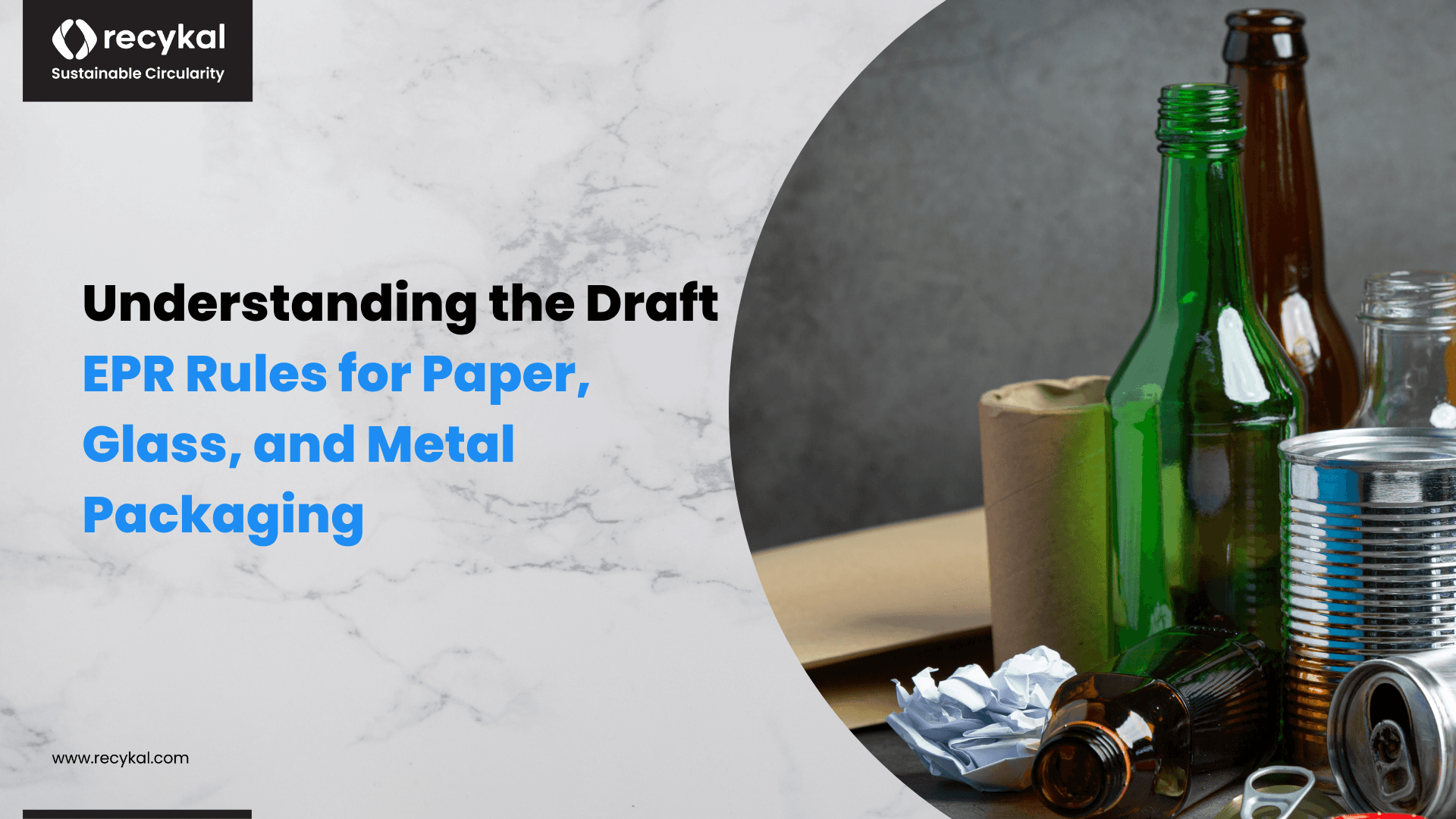
Draft EPR Rules 2025 for Paper, Glass, and Metal Packaging: Explained
Draft EPR Rules 2025 for Paper, Glass, and Metal Packaging: Explained
Aug 13, 2025
Learn about India's draft EPR rules for paper, glass, and metal packaging. Explore their key objectives, implementation strategies, and how they promote sustainable waste management.
Learn about India's draft EPR rules for paper, glass, and metal packaging. Explore their key objectives, implementation strategies, and how they promote sustainable waste management.
The Indian government has taken a significant step towards sustainability with the draft Extended Producer Responsibility (EPR) Rules, 2024. These rules, released by the Ministry of Environment, Forest, and Climate Change, establish a robust framework for managing packaging waste across various materials, including paper, glass, and metal. With the implementation date set for April 1, 2026, the EPR rules aim to foster a circular economy while addressing the pressing issue of packaging waste in India.
Categories of Waste and Key Objectives
The EPR mandate applies to packaging made of paper, glass, and metal, alongside sanitary products. It aims to minimise environmental damage by ensuring the proper collection, recycling, and end-of-life disposal of these materials. The framework highlights four key objectives:
Environmental Protection: Minimising the ecological impact of post-consumer waste.
Circular Economy: Encouraging material reuse and reducing reliance on virgin resources.
Resource Recovery: Promoting the extraction of valuable components from waste.
Job Creation: Generating green jobs in waste management and recycling sectors.
This systematic approach ensures that materials like paper, glass, and metal are managed responsibly, contributing to resource efficiency and environmental sustainability.
EPR Compliance for Paper, Glass, and Metal Packaging
Under the draft rules, Producers, Importers, and Brand Owners (PIBOs) are held accountable for the lifecycle management of their products. They must adhere to defined recycling targets for each material type:
Paper: Targets progressively increase from 50% (2026–27) to 80% by 2029–30.
Glass: Targets rise from 50% (2026–27) to 80% by 2029–30.
Metal: Targets follow a similar progression, starting at 50% and reaching 80%.
Additionally, PIBOs must incorporate a minimum percentage of recycled content into their packaging production. These measures ensure that packaging waste is not only reduced but also reintegrated into production cycles effectively.
Implementation and Compliance
To ensure a seamless transition, the draft rules require PIBOs to register on the Central Pollution Control Board (CPCB) portal. This registration facilitates:
Fulfilment of Recycling Targets: By collaborating with CPCB-approved entities, PIBOs can achieve compliance.
Transparency: Quarterly and annual reports must be filed on the portal, ensuring accountability.
Traceability: A detailed record of waste movement, from collection to disposal, must be maintained.
Non-compliance is addressed through an Environmental Compensation (EC) regime. Penalties and interest on delayed payments, along with potential suspension of operations, underline the importance of adherence to these regulations.
Driving Sustainability Through Circular Economy
The draft EPR rules for paper, glass, and metal packaging mark a transformative shift towards a circular economy. By mandating recycling targets and minimising reliance on virgin resources, these rules encourage innovation and sustainable practices. Circularity ensures that packaging waste is not just managed but transformed into valuable inputs for new products, reducing the overall environmental footprint.
Conclusion
The implementation of the EPR rules for paper, glass, and metal packaging signifies a pivotal moment in India’s journey towards sustainable waste management. By holding stakeholders accountable for the entire lifecycle of packaging materials, these regulations aim to reduce environmental harm while fostering a circular economy.This framework not only addresses the pressing challenges of waste management but also encourages innovation, resource efficiency, and the adoption of greener practices. Compliance with these rules is more than just a regulatory requirement—it is a commitment to environmental stewardship and a crucial step towards creating a sustainable future.
The Indian government has taken a significant step towards sustainability with the draft Extended Producer Responsibility (EPR) Rules, 2024. These rules, released by the Ministry of Environment, Forest, and Climate Change, establish a robust framework for managing packaging waste across various materials, including paper, glass, and metal. With the implementation date set for April 1, 2026, the EPR rules aim to foster a circular economy while addressing the pressing issue of packaging waste in India.
Categories of Waste and Key Objectives
The EPR mandate applies to packaging made of paper, glass, and metal, alongside sanitary products. It aims to minimise environmental damage by ensuring the proper collection, recycling, and end-of-life disposal of these materials. The framework highlights four key objectives:
Environmental Protection: Minimising the ecological impact of post-consumer waste.
Circular Economy: Encouraging material reuse and reducing reliance on virgin resources.
Resource Recovery: Promoting the extraction of valuable components from waste.
Job Creation: Generating green jobs in waste management and recycling sectors.
This systematic approach ensures that materials like paper, glass, and metal are managed responsibly, contributing to resource efficiency and environmental sustainability.
EPR Compliance for Paper, Glass, and Metal Packaging
Under the draft rules, Producers, Importers, and Brand Owners (PIBOs) are held accountable for the lifecycle management of their products. They must adhere to defined recycling targets for each material type:
Paper: Targets progressively increase from 50% (2026–27) to 80% by 2029–30.
Glass: Targets rise from 50% (2026–27) to 80% by 2029–30.
Metal: Targets follow a similar progression, starting at 50% and reaching 80%.
Additionally, PIBOs must incorporate a minimum percentage of recycled content into their packaging production. These measures ensure that packaging waste is not only reduced but also reintegrated into production cycles effectively.
Implementation and Compliance
To ensure a seamless transition, the draft rules require PIBOs to register on the Central Pollution Control Board (CPCB) portal. This registration facilitates:
Fulfilment of Recycling Targets: By collaborating with CPCB-approved entities, PIBOs can achieve compliance.
Transparency: Quarterly and annual reports must be filed on the portal, ensuring accountability.
Traceability: A detailed record of waste movement, from collection to disposal, must be maintained.
Non-compliance is addressed through an Environmental Compensation (EC) regime. Penalties and interest on delayed payments, along with potential suspension of operations, underline the importance of adherence to these regulations.
Driving Sustainability Through Circular Economy
The draft EPR rules for paper, glass, and metal packaging mark a transformative shift towards a circular economy. By mandating recycling targets and minimising reliance on virgin resources, these rules encourage innovation and sustainable practices. Circularity ensures that packaging waste is not just managed but transformed into valuable inputs for new products, reducing the overall environmental footprint.
Conclusion
The implementation of the EPR rules for paper, glass, and metal packaging signifies a pivotal moment in India’s journey towards sustainable waste management. By holding stakeholders accountable for the entire lifecycle of packaging materials, these regulations aim to reduce environmental harm while fostering a circular economy.This framework not only addresses the pressing challenges of waste management but also encourages innovation, resource efficiency, and the adoption of greener practices. Compliance with these rules is more than just a regulatory requirement—it is a commitment to environmental stewardship and a crucial step towards creating a sustainable future.
Related Blogs
Read More From Our Blog
Read More From Our Blog



Join our newsletter list
Sign up to get the most recent blog articles in your email every week.